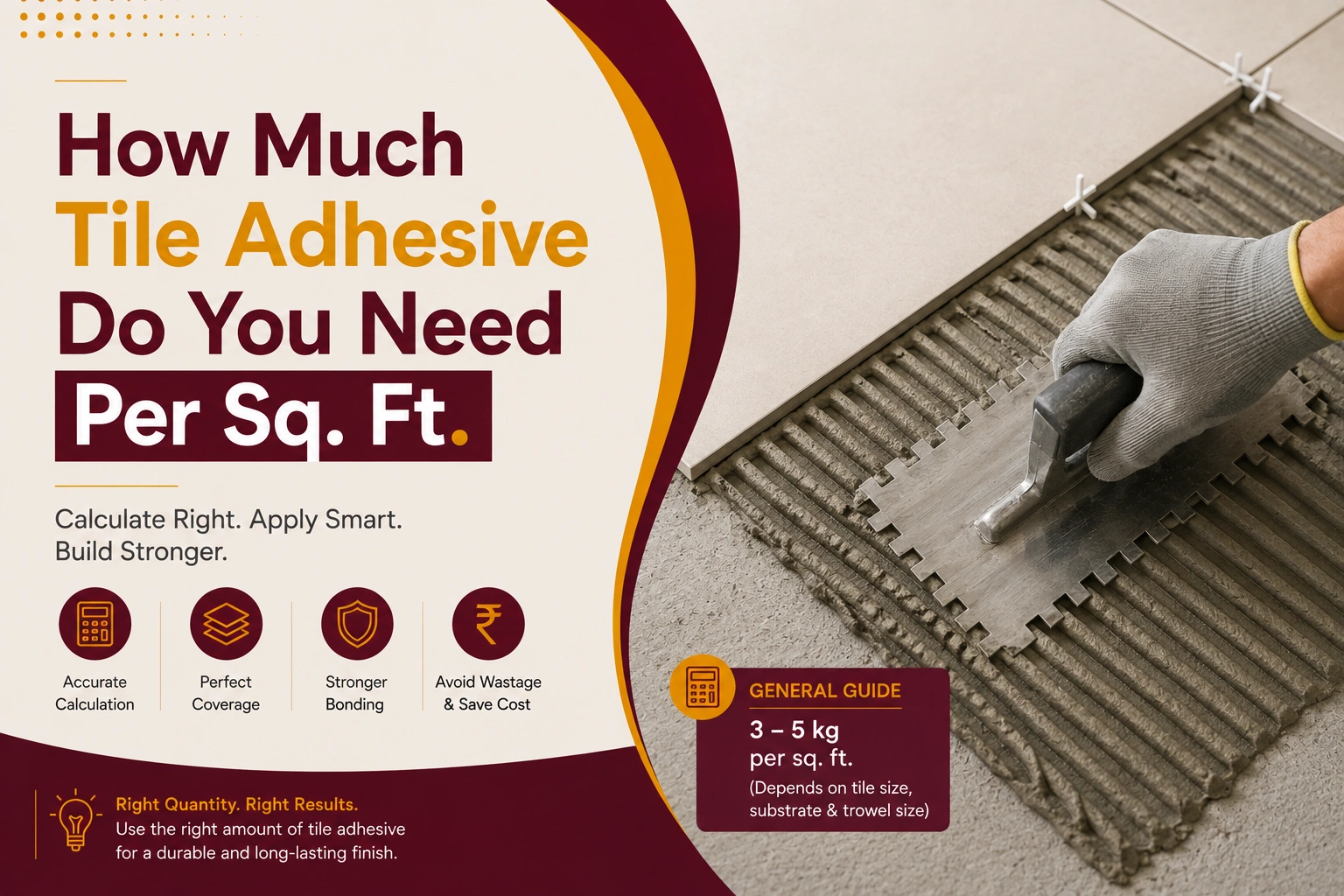
Tile adhesive coverage depends on tile size, substrate condition, adhesive thickness, trowel size and installation technique. As a general planning approach, calculate the quantity using the manufacturer’s stated coverage and then adjust for actual site conditions and reasonable wastage. Accurate estimation helps contractors control costs, reduce material waste and maintain consistent tile bonding.
What Is Tile Adhesive Coverage?
Tile adhesive coverage refers to the area that a specific quantity of adhesive can cover when applied at the recommended thickness and using the appropriate application method.
Coverage is influenced by:
- Tile size
- Tile thickness
- Substrate flatness
- Trowel notch size
- Adhesive layer thickness
- Tile back profile
- Installation technique
- Site conditions
Therefore, there is no single consumption figure that applies to every project.
For professional projects, always use the coverage stated in the product’s technical documentation as the primary reference.
Why Is Tile Adhesive Coverage Important?
Accurate material estimation is particularly important for builders, contractors and project managers.
Correct estimation helps:
- Control project budgets
- Reduce material wastage
- Avoid adhesive shortages
- Improve procurement planning
- Maintain installation consistency
- Reduce unnecessary labour delays
Underestimating the requirement can interrupt installation while additional material is procured. Overestimating, on the other hand, can increase inventory and wastage.
Accurate planning also helps contractors coordinate adhesive requirements with other materials, including tile grout, cleaners and finishing products.
What Factors Affect Tile Adhesive Coverage?
1. Tile Size
Large-format tiles generally require more careful adhesive coverage than smaller tiles.
They may also require back-buttering to achieve appropriate contact between the tile and substrate, depending on the installation requirements.
2. Substrate Flatness
An uneven substrate can increase adhesive consumption because installers may use additional material to compensate for surface variations.
However, adhesive should not be used as a substitute for proper substrate levelling.
3. Trowel Size
The notched trowel controls the amount of adhesive applied.
Larger notches generally create a thicker adhesive bed and can increase consumption.
4. Adhesive Thickness
Applying excessive adhesive increases consumption without necessarily improving installation quality.
The recommended thickness should always follow the product instructions.
5. Tile Back Profile
Tiles with deeper grooves or irregular backs may require different application techniques to achieve appropriate coverage.
6. Installation Technique
Consistent trowel angle, correct spreading direction and proper tile placement can help achieve more predictable material usage.
How to Calculate Tile Adhesive Quantity
A simple planning formula is:
Required Quantity = Total Area ÷ Product Coverage
For example, if a product’s technical data states that one bag covers a particular area under specified application conditions, divide the total installation area by that coverage.
Example
Suppose:
- Project area = 1,000 sq. ft.
- Manufacturer’s coverage = 50 sq. ft. per bag
Then:
1,000 ÷ 50 = 20 bags
The theoretical requirement is therefore 20 bags.
If site conditions are expected to increase consumption, an appropriate project allowance can be added based on professional assessment.
Do not apply one fixed wastage percentage to every project because actual requirements vary.
Also Read: What Is Tile Fixing Adhesive and How Does It Work?
Tile Adhesive Coverage by Application
| Application | Factors Affecting Consumption |
|---|---|
| Small floor tiles | Trowel size and substrate |
| Large-format tiles | Coverage and back-buttering |
| Wall tiles | Sag resistance and application thickness |
| Outdoor tiles | Substrate and environmental conditions |
| Renovation projects | Existing surface condition |
| Uneven substrates | Higher potential consumption |
The correct tile fixing adhesive should also be selected according to the tile, substrate and application environment rather than coverage alone.
How to Improve Tile Adhesive Coverage
Prepare the Substrate
The surface should be clean, stable and appropriately levelled before adhesive application.
Select the Correct Trowel
Use the trowel recommended for the tile size and adhesive.
Maintain Consistent Thickness
Avoid creating unnecessarily thick adhesive beds.
Mix Correctly
Follow the manufacturer’s specified water-to-powder ratio and mixing instructions.
Use Proper Application Technique
Spread the adhesive consistently instead of applying excessive material.
Plan Material Storage
Keep bags protected from moisture and store them according to the manufacturer’s recommendations.
Common Tile Adhesive Calculation Mistakes
Using an Internet Estimate Without Checking the Product
Different adhesive formulations have different coverage characteristics.
Ignoring Tile Size
A coverage estimate for small tiles may not apply to large-format tiles.
Adding Excessive Water
Incorrect mixing can affect application characteristics and bonding performance.
Using Adhesive to Level the Floor
Major substrate irregularities should be corrected before tile installation.
Ignoring Wastage
Cutting, handling and application can result in material losses.
Focusing Only on Price
A lower purchase price does not necessarily mean a lower total installation cost. Coverage, performance and application requirements should also be considered.
Tile Adhesive Is Only One Part of the Installation System
A successful tiling project requires coordination between the substrate, adhesive, tiles, joints and maintenance.
After fixing the tiles, contractors may need a suitable grout and a compatible tile cleaning solution for removing construction residue and maintaining the finished surface.
For demanding joints, epoxy tile filler can be considered where the application requires a dense and low-porosity joint material.
Similarly, waterproof epoxy grout may be suitable for appropriate moisture-exposed applications when supported by the product’s technical specifications.
These products should be selected according to the actual project requirements rather than used interchangeably.
Other Construction Materials to Consider
Tile installation projects are often part of larger construction activities.
Depending on the project, contractors may also require admixture for concrete or cementitious applications.
Similarly, customers searching for white cement online should compare technical specifications, intended application, packaging and manufacturer recommendations before purchasing.
These materials serve different purposes, so they should be planned independently as part of the overall project material schedule.
Mozaic Chemical Tile Adhesive Solutions
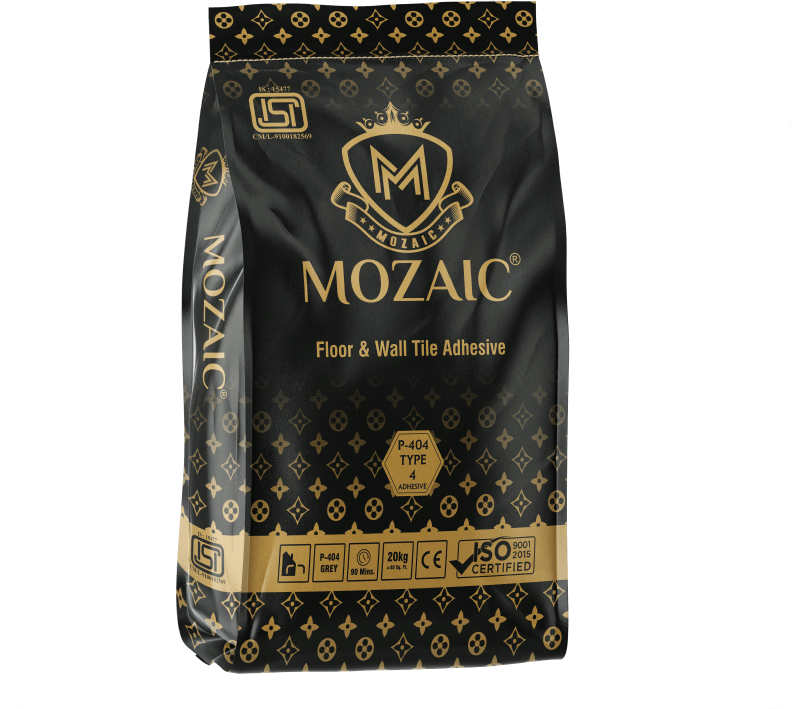
Mozaic Chemical offers tile adhesive solutions for different tile installation requirements.
For contractors and project managers, the right product should be selected based on:
- Tile type
- Tile size
- Substrate
- Interior or exterior application
- Moisture exposure
- Required adhesive thickness
- Application method
- Manufacturer recommendations
This product-based approach is more reliable than using a generic coverage figure.
Mozaic Chemical’s Industry Presence
Mozaic Chemical is an Indian manufacturer and supplier of tile adhesives, grouts and construction chemical solutions.
Its broader portfolio allows contractors to evaluate different requirements across tile installation and construction chemical applications.
For projects requiring dependable tile installation materials, professionals should review the technical specifications of the selected product and match them with the project conditions.
Expert Recommendation
Before ordering adhesive for a project:
- Measure the actual installation area.
- Identify the tile type and size.
- Check the substrate condition.
- Review the manufacturer’s coverage.
- Select the recommended trowel.
- Calculate the theoretical requirement.
- Assess realistic site wastage.
- Order sufficient material for uninterrupted installation.
The manufacturer’s technical data sheet should always take priority over generic online coverage estimates.
Key Takeaways
Tile adhesive coverage cannot be determined by area alone. Tile size, trowel notch, adhesive thickness, substrate condition and installation technique all influence consumption.
For accurate procurement, calculate the total project area, divide it by the manufacturer’s stated coverage and then assess actual site conditions.
A proper material estimate helps contractors reduce wastage, avoid shortages and maintain a more efficient tile installation process.
Frequently Asked Questions
How much tile adhesive is required per sq. ft.?
The requirement varies by product, tile size, trowel and application thickness. Always use the manufacturer’s stated coverage for the selected adhesive.
How do I calculate tile adhesive quantity?
Divide the total installation area by the product’s stated coverage per bag or unit. Then assess whether site conditions may increase consumption.
Does tile size affect adhesive consumption?
Yes. Large-format tiles can require different application methods and potentially higher adhesive consumption.
Does substrate unevenness increase adhesive usage?
Yes. Uneven surfaces can increase consumption. Proper substrate preparation is therefore important before tile installation.
Can tile adhesive be used to level a floor?
Generally, adhesive should not replace proper substrate levelling unless the specific product expressly permits that application.
How can contractors reduce adhesive wastage?
Use the correct trowel, maintain consistent adhesive thickness, mix according to instructions and properly prepare the substrate.
Is manufacturer coverage always the same on site?
No. Stated coverage is generally based on specified application conditions. Actual consumption can vary according to tile, substrate, trowel and installation technique.