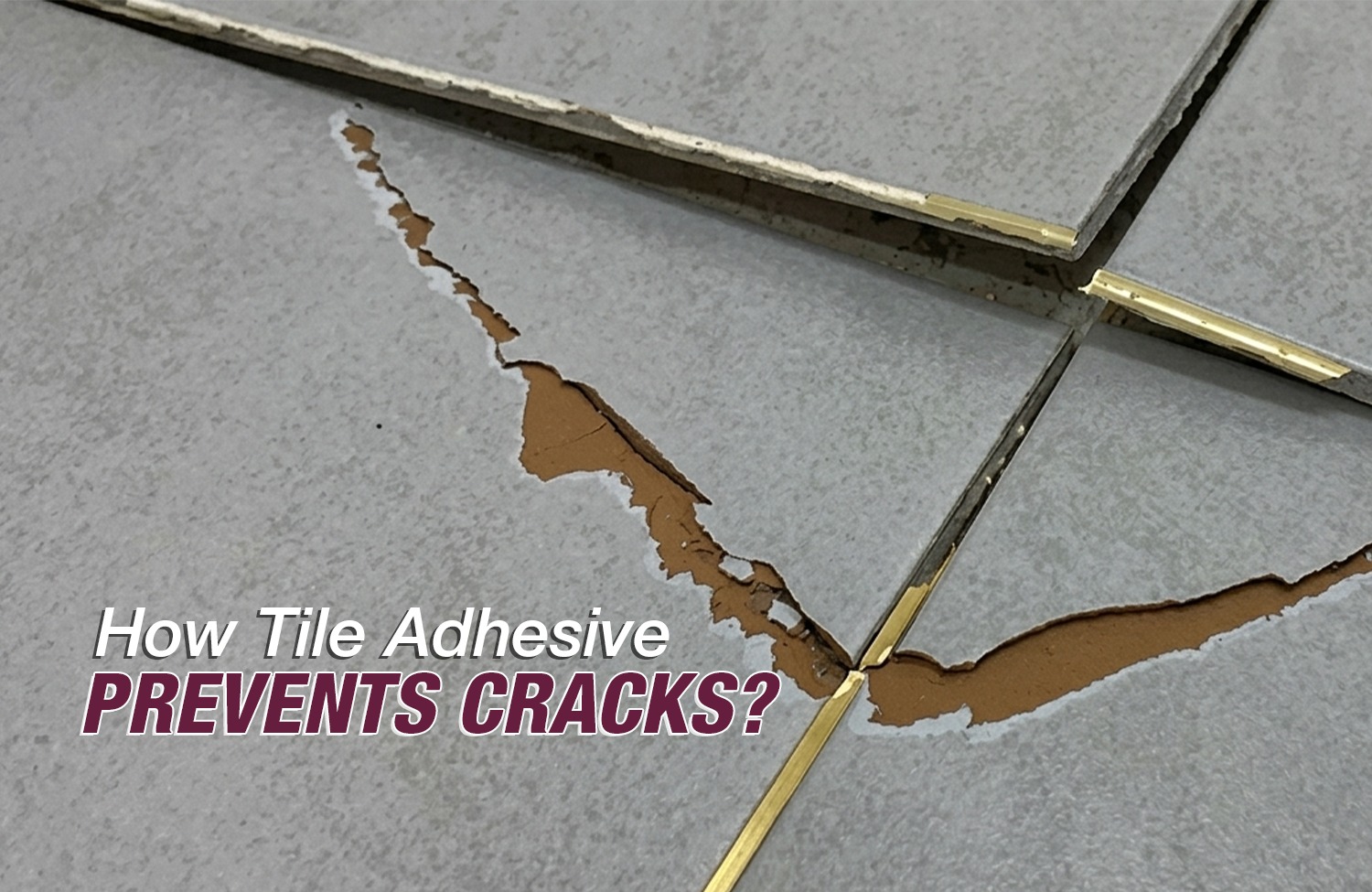
In India, due to rapid urbanisation and housing demand, the tile adhesive market is growing at 8-9% CAGR. Within this market, the still population is facing tile failures like cracks, hollow spots, and detachments.
This overall scenario demands the need of ceramic tile adhesives. It provides enhanced polymers, offers stronger adhesion and flexibility, helping tiles withstand temperature changes, moisture, and structural movement, making them essential for long-lasting, crack-free installations.
Modern adhesives also offer good stickiness, elasticity, and durability, unlike the old methods, which only achieved a good stickiness. Knowledge of ceramic tile adhesive can be useful in achieving a stable, long-term installation of tiles.
What is Ceramic Tile Adhesive?
Ceramic tile adhesive is a bonding material that is specially designed to bond the tiles to the surface like the floor and walls. It has largely been preferred to the traditional cement adhesive due to its high strength, convenience, or even consistency.
Contemporary adhesives are designed to offer more adhesiveness and minimise the installation mistakes and they can meet the environmental changes hence suit residential and commercial building projects.
Why Do Tiles Crack or Detach?
Being aware of how adhesives guard against problems, it is necessary to be familiar with the factors that usually lead to tile breaking and detachment:
- Ineffective adhesion of tile and surface.
- Lack of adhesive in some of the areas.
- The bonding material is not flexible.
- Superficial movement or distention.
- Improper installation methods, such as wrong break joint tile designs.
Such forces may undermine the building with time and cause cracks and tiles that are loose.
Strong Bonding Strength
The high bonding strength is one of the main factors that made ceramic tile adhesive effective. It develops a strong bond between the tile and the substrate that is enough to have the tiles remain in position despite the heavy load.
In contrast to old fashioned tiles that are glued on the floor, the contemporary adhesive ensures even adhesion and reduces the risk of having cracks or pointy areas that may cause the tiles to loosen.
The ability to deal with movement
Naturally, surfaces expand and contract following changes in temperature and loads. The conventional cement glue is not flexible and it is known to crack when stressed.
Instead, flexible tile adhesive is one that is made to allow small movements without fracturing. This flexibility also assists in avoiding the cracking of the tiles and also ensures the integrity of the installation over time.
Even Distribution of Load
Inadequate adhesive use may result in the formation of hollow areas under tiles resulting to the uneven distribution of loads. These weak spots may lead to the breakage of tiles when strained.
Ceramic tile adhesive permits a spread, which is even and fully in contact with the surface and the tile. This will minimize stressors and remove cracks due to unequal distribution of weight.
Improved sticking to a wide range of surfaces
The modern ceramic tile adhesive is applicable on most types of surfaces such as concrete, cement boards, as well as existing tiles. Such versatility makes it a good connection no matter what base material to use.
Choosing the right tile adhesive for floor is used so that the tiles are firmly stuck, even to heavy furniture or in trafficable places.
Sensitivity to Moisture and Temperature
Large factors that lead to the damage of tiles are moisture and temperature changes. Bathrooms, kitchens and outdoor areas expose the bond to water, which may compromise it in case of an incorrect adhesive applied.
Adhesive that binds ceramic tiles is usually designed to withstand moisture and heat variations to minimize the chances of tiles being knocked off as well as increasing the life span of the tiles.
Proper Tile Layout Compatibility
Durability is also a factor of how the tiles are laid. The presence of patterns can be used to evenly spread stress on the surface like the use of break joint tiles and minimize the possibility of cracks.
By adding a good quality adhesive, correct tile patterns increase stability and would produce long lasting outcomes.
Less Shrinkage and Cracking
Conventional cement adhesive shrinks on drying and this may leave openings and vulnerabilities in the connection between tiles and the surface.
Adhesive of ceramic tiles is made in a way that it reduces shrinkage to ensure that the bonding strength will remain constant during the entire curing procedure. This greatly helps in preventing cracks and wear off of tiles.
Remote and more convenient installation
The other benefit of ceramic tile adhesive is that it is easy to apply. It is more workable enabling installers to get it perfectly placed and aligned.
During the study of Installing Tiles with Adhesive, the contemporary products make the task easier and minimize the chances of making major mistakes that can cause the tiles to fall.
Increased Grouting of Wall and Floor
An adhesive is not all it takes to complete a tile installation. The grouting is also important to ensure the stability of tiles.
It is also important to apply high-quality grout from trusted tile grout manufacturers in india so that spaces between tiles are well taken care of so that no water can enter and to make the structure even stronger.
Long-Term Cost Efficiency
Although the use of ceramic tile adhesive may appear to be more costly at first than the traditional cement adhesive, the former has extra advantages of higher durability and lower cost of maintenance over time.
It is a cost-effective option in the long run because of fewer repairs, fewer tiles replacement needs, and better longevity.
Conclusion
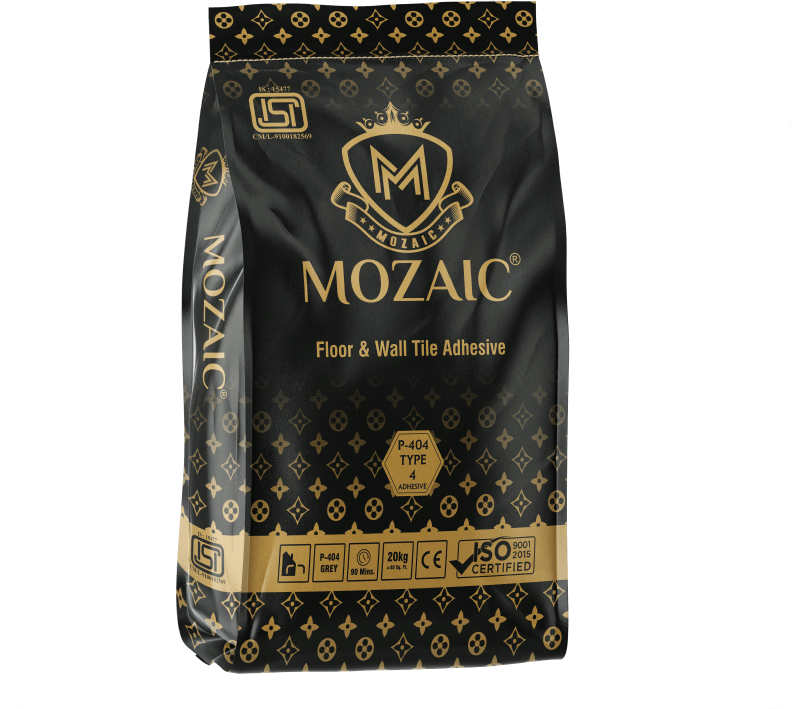
The right mozaic ceramic tile adhesive or tiles glue on floor is vital in ensuring that tile cracks and detaching are prevented. It is a better substitute to conventional techniques due to its high adhesive capability, ability to withstand weather, as well as environmental conditions, and being easy to use.
With the right installation methods, the correct adhesive of floor tiles, and the choice of appropriate material (grout) to combine it with, you can make a considerable contribution to the life of your tiled surfaces and their performance.
Not only does the addition of the appropriate adhesive ensure that your space looks great, but also, the tiles used by you will not be damaged or dislodged any time soon.