
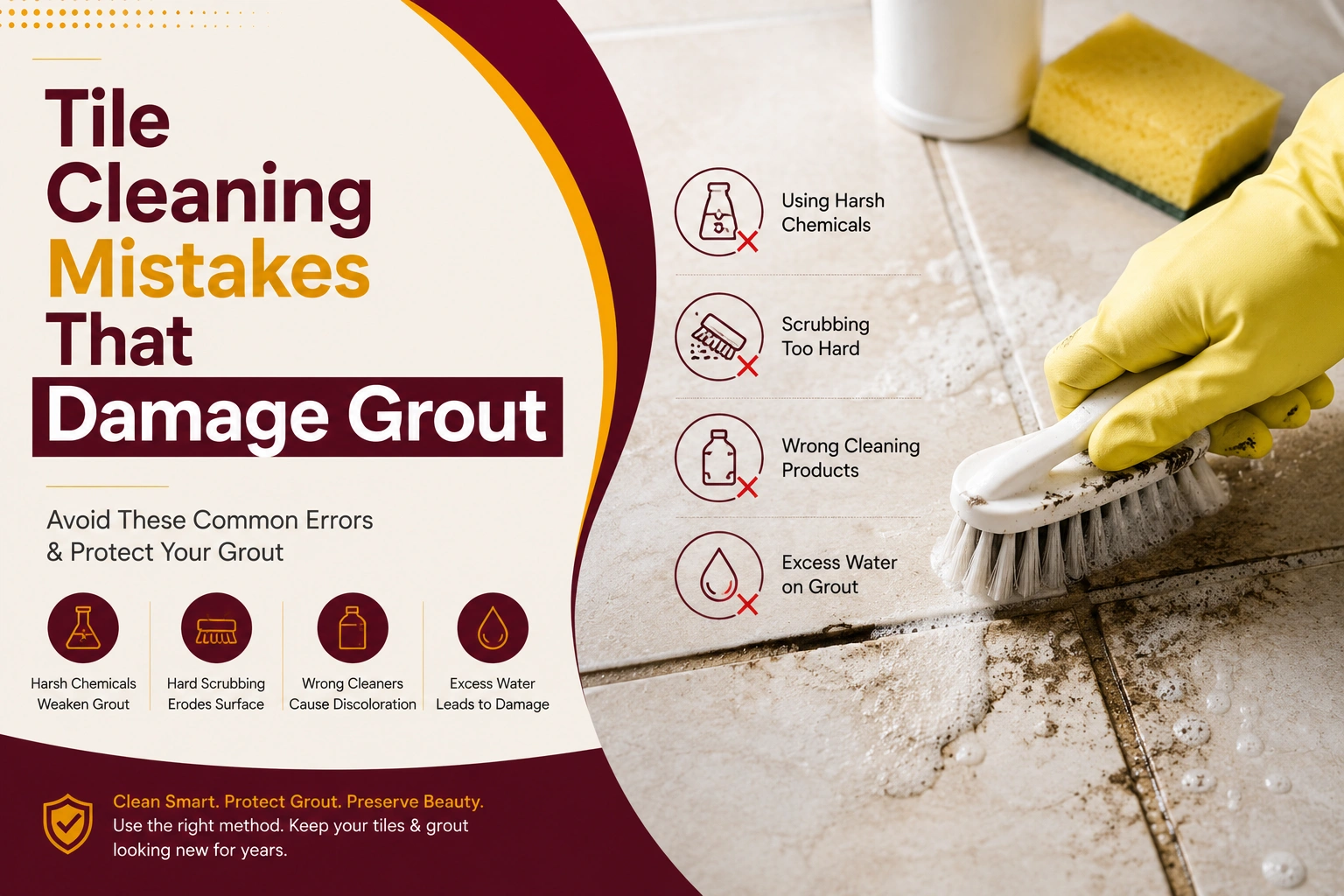
Tile Cleaning Mistakes That Damage Grout

Tile Cleaning Mistakes That Damage Grout

Using the wrong cleaner, excessive scrubbing, leaving dirty water on tiles, and applying harsh chemicals can gradually damage grout. A grout safe cleaner should remove dirt without weakening or discolouring the joints. Proper dilution, suitable tools, regular maintenance, and the right cleaning technique help protect grout while keeping tiled surfaces clean, hygienic, and attractive.

What Is a Grout Safe Cleaner?

A grout safe cleaner is a tile-cleaning product formulated to remove dirt, stains, grease, soap residue, and other surface contaminants without unnecessarily damaging grout joints.

Grout is often more vulnerable than the tile surface itself. While glazed and porcelain tiles can withstand routine cleaning, grout may be more porous and can absorb moisture, dirt, and cleaning chemicals.

Therefore, choosing a compatible cleaning solution is essential for long-term tile and grout maintenance.

Mozaic Chemical provides dedicated tile-cleaning solutions as part of its broader tile installation and maintenance product range.

Why Is Proper Grout Cleaning Important?

Grout does more than fill the gaps between tiles. It helps protect tile edges and creates a finished, continuous surface.

Incorrect cleaning practices can cause:

  • Grout discolouration
  • Surface erosion
  • Cracking
  • Joint deterioration
  • Powdery grout
  • Staining
  • Moisture penetration

For builders, facility managers, contractors, and homeowners, preventing grout damage is usually more economical than replacing deteriorated joints.

7 Tile Cleaning Mistakes That Damage Grout

1. Using Harsh Acidic Cleaners Too Frequently

Strong acidic cleaners can be effective against certain deposits, but frequent or inappropriate use may affect grout and surrounding surfaces.

This is especially important for cement-based grout.

Instead, select a cleaning product appropriate for the tile and grout system and follow the manufacturer’s recommended dilution and application procedure.

2. Using Excessive Scrubbing Force

Aggressive scrubbing can gradually wear the surface of vulnerable grout.

Hard brushes and abrasive pads may also create unnecessary surface damage.

For routine maintenance, use an appropriate soft or medium-bristle brush, microfiber mop, or cleaning tool recommended for the surface.

The objective is to remove contamination without mechanically attacking the grout.

3. Leaving Cleaning Chemicals on the Surface

Allowing cleaning chemicals to remain on tile joints for longer than recommended can increase the possibility of surface damage or discolouration.

Always follow the product’s specified contact time.

After cleaning, rinse where required and remove excess moisture.

4. Using the Wrong Cleaner for the Tile and Grout

Not every cleaning product works for every surface.

For example, natural stone, glazed tiles, porcelain, ceramic tiles, epoxy grout, and cement-based grout can have different maintenance requirements.

A professional tile cleaning solution should be selected according to the surface and type of contamination.

Before applying any new product across a large area, test it on a small, inconspicuous section.

5. Ignoring Grout Lines While Cleaning Tiles

A common mistake is focusing entirely on the tile surface while ignoring the joints.

Grout lines collect:

  • Dust
  • Soap residue
  • Food particles
  • Grease
  • Moisture
  • Dirt

Regular grout cleaning is therefore an important part of complete tile grout maintenance.

6. Allowing Dirty Water to Dry on the Floor

Mopping with heavily contaminated water can redistribute dirt instead of removing it.

When dirty water dries, it can leave behind:

  • Residue
  • Water marks
  • Dirt deposits
  • Dull-looking grout

Use clean water and replace it regularly during larger cleaning jobs.

7. Cleaning Damaged Grout Without Repairing It

Cleaning cannot fix structurally damaged grout.

If grout has already developed significant:

  • Cracks
  • Missing sections
  • Deep erosion
  • Loose joints
  • Persistent moisture damage

the affected area may require repair or replacement before normal maintenance continues.

Also Read: How Long Does Tile Grout Last?

Cement Grout vs Epoxy Grout: Cleaning Considerations

Different grout types require different maintenance approaches.

FeatureCement-Based GroutEpoxy Grout
PorosityGenerally higherVery low
Stain ResistanceModerateHigh
Cleaning SensitivityRequires suitable productsGenerally easier to maintain
Moisture ResistanceDepends on formulationHigh
MaintenanceRequires regular careRelatively low maintenance

Epoxy systems are often selected for demanding environments because they offer high resistance to stains, moisture, and many chemicals.

For example, waterproof epoxy grout can be useful in areas exposed to frequent water and cleaning, such as bathrooms, kitchens, and certain commercial applications.

Step-by-Step Guide to Cleaning Tiles Without Damaging Grout

Step 1: Remove Loose Dirt

Sweep or vacuum the surface first.

This prevents loose dust and sand from becoming abrasive during wet cleaning.

Step 2: Select the Correct Cleaner

Choose a cleaner compatible with both the tile and grout.

Do not assume that a stronger chemical will produce better results.

Step 3: Follow the Recommended Dilution

If the product requires dilution, measure it accurately.

Using a concentrated cleaner unnecessarily can increase the risk of surface damage.

Step 4: Apply Evenly

Spread the cleaning solution across the surface without allowing excessive pooling.

Step 5: Clean Gently

Use a suitable mop or brush to remove dirt.

Avoid excessive force on grout joints.

Step 6: Rinse When Required

Remove cleaning residue according to the product instructions.

Step 7: Dry the Surface

Drying helps prevent water marks and excessive moisture accumulation around joints.

How to Prevent Grout Damage During Routine Cleaning

A good maintenance routine should include:

  • Regular sweeping or vacuuming
  • Weekly or scheduled mopping
  • Periodic grout inspection
  • Prompt removal of spills
  • Appropriate cleaning products
  • Correct cleaner dilution
  • Gentle cleaning tools
  • Timely grout repairs

If the installation contains epoxy joints, avoid treating them as indestructible. Proper maintenance is still important for preserving colour and surface appearance.

What About Epoxy Tile Filler?

Epoxy tile filler can provide durable joint performance in demanding applications, but the finished installation still requires appropriate maintenance.

Epoxy-based joints are generally resistant to staining and moisture, yet surface contamination should be removed regularly.

Using compatible cleaning products helps maintain both appearance and performance.

The Role of Other Tile Installation Products

Grout performance also depends on the overall installation system.

A suitable wall tile adhesive or floor adhesive helps provide stable tile bonding. Proper installation reduces movement and stress on joints.

Similarly, a correctly selected grout system protects the spaces between tiles.

Mozaic Chemical offers tile adhesives, grouts, epoxy grouts, and tile cleaners as part of its construction chemical portfolio.

This integrated approach helps contractors select compatible products for installation and maintenance.

Mozaic Chemical: Complete Tile Installation & Maintenance Solutions

Mozaic Chemical provides construction chemical solutions for builders, contractors, architects, interior designers, and other professionals involved in tile installation.

Its product portfolio includes:

  • Tile Adhesives
  • Tile Grouts
  • Epoxy Grouts
  • Tile Cleaners
  • White Cement
  • Construction Chemicals

The company focuses on providing products for different tile installation, joint-filling, cleaning, and construction requirements.

For professionals, having compatible adhesive, grout, and cleaning systems can simplify product selection and support consistent project outcomes.

Mozaic Chemical’s Industry Presence

Mozaic Chemical is positioned as a major grout manufacturer and supplier in India, with a broad portfolio serving different tile installation and construction requirements.

Its range includes multiple grout and epoxy grout solutions designed for residential, commercial, and demanding applications.

For builders and contractors, this broad product portfolio provides options based on tile type, joint requirements, environmental exposure, and project conditions.

Expert Recommendation

For long-lasting grout performance, professionals should focus on prevention rather than aggressive cleaning.

The best approach is to:

  1. Identify the grout type before choosing a cleaner.
  2. Use a compatible grout safe cleaner.
  3. Follow the manufacturer’s dilution instructions.
  4. Avoid unnecessary abrasive scrubbing.
  5. Clean spills quickly.
  6. Inspect joints regularly.
  7. Repair damaged grout promptly.
  8. Use suitable products throughout the tile installation system.

A well-maintained grout joint not only looks better but can also help protect the overall tiled surface.

Summary / Key Takeaways

Tile cleaning should remove dirt without damaging the grout underneath.

The most common mistakes include using harsh chemicals, excessive scrubbing, incorrect dilution, leaving cleaning products on the surface, and ignoring damaged grout.

Using a grout safe cleaner, appropriate tools, and a consistent maintenance schedule can significantly reduce grout deterioration.

For new installations, selecting compatible tile adhesive, grout, epoxy grout, and cleaning products creates a more complete approach to long-term tile maintenance.

Frequently Asked Questions

1. What is the safest cleaner for grout?

A cleaner specifically formulated and recommended for the particular tile and grout type is generally the safest choice. Always follow the manufacturer’s dilution and application instructions.

2. Can acidic cleaners damage grout?

Yes. Frequent or inappropriate use of strong acidic cleaners can damage certain grout systems, particularly cement-based grout.

3. How often should grout be cleaned?

Grout should be cleaned as part of the normal tile maintenance routine. High-traffic and moisture-prone areas may require more frequent cleaning.

4. Can I use a hard brush on grout?

A hard brush can cause unnecessary wear on some grout surfaces. Use a suitable brush recommended for the grout type and avoid excessive pressure.

5. Why does grout become discoloured after cleaning?

Discolouration may result from harsh chemicals, incorrect dilution, staining, residue, moisture, or existing grout deterioration.

6. Is epoxy grout easier to clean than cement grout?

Epoxy grout generally has lower porosity and higher stain resistance, which can make it easier to maintain than conventional cement-based grout.

7. Can cleaning fix cracked grout?

No. Cleaning removes surface contamination but does not repair structurally damaged grout. Cracked or missing grout may need repair or replacement.

8. How can I prevent grout from getting damaged?

Use a compatible grout safe cleaner, follow the recommended dilution, avoid abrasive tools, clean spills promptly, and inspect grout regularly.

Contact Mozaic Chemical

Looking for reliable tile cleaning, grout, or tile installation solutions?

Call Us: +91 9713200009
WhatsApp Us: +919588704408
Email Us: Info@mozaicchemical.com
Product Details
GENERAL ENQUIRY
contact us form
Social Links

Tile Cleaning Mistakes That Damage Grout

Table of Contents

Using the wrong cleaner, excessive scrubbing, leaving dirty water on tiles, and applying harsh chemicals can gradually damage grout. A grout safe cleaner should remove dirt without weakening or discolouring the joints. Proper dilution, suitable tools, regular maintenance, and the right cleaning technique help protect grout while keeping tiled surfaces clean, hygienic, and attractive.

What Is a Grout Safe Cleaner?

A grout safe cleaner is a tile-cleaning product formulated to remove dirt, stains, grease, soap residue, and other surface contaminants without unnecessarily damaging grout joints.

Grout is often more vulnerable than the tile surface itself. While glazed and porcelain tiles can withstand routine cleaning, grout may be more porous and can absorb moisture, dirt, and cleaning chemicals.

Therefore, choosing a compatible cleaning solution is essential for long-term tile and grout maintenance.

Mozaic Chemical provides dedicated tile-cleaning solutions as part of its broader tile installation and maintenance product range.

Why Is Proper Grout Cleaning Important?

Grout does more than fill the gaps between tiles. It helps protect tile edges and creates a finished, continuous surface.

Incorrect cleaning practices can cause:

  • Grout discolouration
  • Surface erosion
  • Cracking
  • Joint deterioration
  • Powdery grout
  • Staining
  • Moisture penetration

For builders, facility managers, contractors, and homeowners, preventing grout damage is usually more economical than replacing deteriorated joints.

7 Tile Cleaning Mistakes That Damage Grout

1. Using Harsh Acidic Cleaners Too Frequently

Strong acidic cleaners can be effective against certain deposits, but frequent or inappropriate use may affect grout and surrounding surfaces.

This is especially important for cement-based grout.

Instead, select a cleaning product appropriate for the tile and grout system and follow the manufacturer’s recommended dilution and application procedure.

2. Using Excessive Scrubbing Force

Aggressive scrubbing can gradually wear the surface of vulnerable grout.

Hard brushes and abrasive pads may also create unnecessary surface damage.

For routine maintenance, use an appropriate soft or medium-bristle brush, microfiber mop, or cleaning tool recommended for the surface.

The objective is to remove contamination without mechanically attacking the grout.

3. Leaving Cleaning Chemicals on the Surface

Allowing cleaning chemicals to remain on tile joints for longer than recommended can increase the possibility of surface damage or discolouration.

Always follow the product’s specified contact time.

After cleaning, rinse where required and remove excess moisture.

4. Using the Wrong Cleaner for the Tile and Grout

Not every cleaning product works for every surface.

For example, natural stone, glazed tiles, porcelain, ceramic tiles, epoxy grout, and cement-based grout can have different maintenance requirements.

A professional tile cleaning solution should be selected according to the surface and type of contamination.

Before applying any new product across a large area, test it on a small, inconspicuous section.

5. Ignoring Grout Lines While Cleaning Tiles

A common mistake is focusing entirely on the tile surface while ignoring the joints.

Grout lines collect:

  • Dust
  • Soap residue
  • Food particles
  • Grease
  • Moisture
  • Dirt

Regular grout cleaning is therefore an important part of complete tile grout maintenance.

6. Allowing Dirty Water to Dry on the Floor

Mopping with heavily contaminated water can redistribute dirt instead of removing it.

When dirty water dries, it can leave behind:

  • Residue
  • Water marks
  • Dirt deposits
  • Dull-looking grout

Use clean water and replace it regularly during larger cleaning jobs.

7. Cleaning Damaged Grout Without Repairing It

Cleaning cannot fix structurally damaged grout.

If grout has already developed significant:

  • Cracks
  • Missing sections
  • Deep erosion
  • Loose joints
  • Persistent moisture damage

the affected area may require repair or replacement before normal maintenance continues.

Also Read: How Long Does Tile Grout Last?

Cement Grout vs Epoxy Grout: Cleaning Considerations

Different grout types require different maintenance approaches.

FeatureCement-Based GroutEpoxy Grout
PorosityGenerally higherVery low
Stain ResistanceModerateHigh
Cleaning SensitivityRequires suitable productsGenerally easier to maintain
Moisture ResistanceDepends on formulationHigh
MaintenanceRequires regular careRelatively low maintenance

Epoxy systems are often selected for demanding environments because they offer high resistance to stains, moisture, and many chemicals.

For example, waterproof epoxy grout can be useful in areas exposed to frequent water and cleaning, such as bathrooms, kitchens, and certain commercial applications.

Step-by-Step Guide to Cleaning Tiles Without Damaging Grout

Step 1: Remove Loose Dirt

Sweep or vacuum the surface first.

This prevents loose dust and sand from becoming abrasive during wet cleaning.

Step 2: Select the Correct Cleaner

Choose a cleaner compatible with both the tile and grout.

Do not assume that a stronger chemical will produce better results.

Step 3: Follow the Recommended Dilution

If the product requires dilution, measure it accurately.

Using a concentrated cleaner unnecessarily can increase the risk of surface damage.

Step 4: Apply Evenly

Spread the cleaning solution across the surface without allowing excessive pooling.

Step 5: Clean Gently

Use a suitable mop or brush to remove dirt.

Avoid excessive force on grout joints.

Step 6: Rinse When Required

Remove cleaning residue according to the product instructions.

Step 7: Dry the Surface

Drying helps prevent water marks and excessive moisture accumulation around joints.

How to Prevent Grout Damage During Routine Cleaning

A good maintenance routine should include:

  • Regular sweeping or vacuuming
  • Weekly or scheduled mopping
  • Periodic grout inspection
  • Prompt removal of spills
  • Appropriate cleaning products
  • Correct cleaner dilution
  • Gentle cleaning tools
  • Timely grout repairs

If the installation contains epoxy joints, avoid treating them as indestructible. Proper maintenance is still important for preserving colour and surface appearance.

What About Epoxy Tile Filler?

Epoxy tile filler can provide durable joint performance in demanding applications, but the finished installation still requires appropriate maintenance.

Epoxy-based joints are generally resistant to staining and moisture, yet surface contamination should be removed regularly.

Using compatible cleaning products helps maintain both appearance and performance.

The Role of Other Tile Installation Products

Grout performance also depends on the overall installation system.

A suitable wall tile adhesive or floor adhesive helps provide stable tile bonding. Proper installation reduces movement and stress on joints.

Similarly, a correctly selected grout system protects the spaces between tiles.

Mozaic Chemical offers tile adhesives, grouts, epoxy grouts, and tile cleaners as part of its construction chemical portfolio.

This integrated approach helps contractors select compatible products for installation and maintenance.

Mozaic Chemical: Complete Tile Installation & Maintenance Solutions

Mozaic Chemical provides construction chemical solutions for builders, contractors, architects, interior designers, and other professionals involved in tile installation.

Its product portfolio includes:

  • Tile Adhesives
  • Tile Grouts
  • Epoxy Grouts
  • Tile Cleaners
  • White Cement
  • Construction Chemicals

The company focuses on providing products for different tile installation, joint-filling, cleaning, and construction requirements.

For professionals, having compatible adhesive, grout, and cleaning systems can simplify product selection and support consistent project outcomes.

Mozaic Chemical’s Industry Presence

Mozaic Chemical is positioned as a major grout manufacturer and supplier in India, with a broad portfolio serving different tile installation and construction requirements.

Its range includes multiple grout and epoxy grout solutions designed for residential, commercial, and demanding applications.

For builders and contractors, this broad product portfolio provides options based on tile type, joint requirements, environmental exposure, and project conditions.

Expert Recommendation

For long-lasting grout performance, professionals should focus on prevention rather than aggressive cleaning.

The best approach is to:

  1. Identify the grout type before choosing a cleaner.
  2. Use a compatible grout safe cleaner.
  3. Follow the manufacturer’s dilution instructions.
  4. Avoid unnecessary abrasive scrubbing.
  5. Clean spills quickly.
  6. Inspect joints regularly.
  7. Repair damaged grout promptly.
  8. Use suitable products throughout the tile installation system.

A well-maintained grout joint not only looks better but can also help protect the overall tiled surface.

Summary / Key Takeaways

Tile cleaning should remove dirt without damaging the grout underneath.

The most common mistakes include using harsh chemicals, excessive scrubbing, incorrect dilution, leaving cleaning products on the surface, and ignoring damaged grout.

Using a grout safe cleaner, appropriate tools, and a consistent maintenance schedule can significantly reduce grout deterioration.

For new installations, selecting compatible tile adhesive, grout, epoxy grout, and cleaning products creates a more complete approach to long-term tile maintenance.

Frequently Asked Questions

1. What is the safest cleaner for grout?

A cleaner specifically formulated and recommended for the particular tile and grout type is generally the safest choice. Always follow the manufacturer’s dilution and application instructions.

2. Can acidic cleaners damage grout?

Yes. Frequent or inappropriate use of strong acidic cleaners can damage certain grout systems, particularly cement-based grout.

3. How often should grout be cleaned?

Grout should be cleaned as part of the normal tile maintenance routine. High-traffic and moisture-prone areas may require more frequent cleaning.

4. Can I use a hard brush on grout?

A hard brush can cause unnecessary wear on some grout surfaces. Use a suitable brush recommended for the grout type and avoid excessive pressure.

5. Why does grout become discoloured after cleaning?

Discolouration may result from harsh chemicals, incorrect dilution, staining, residue, moisture, or existing grout deterioration.

6. Is epoxy grout easier to clean than cement grout?

Epoxy grout generally has lower porosity and higher stain resistance, which can make it easier to maintain than conventional cement-based grout.

7. Can cleaning fix cracked grout?

No. Cleaning removes surface contamination but does not repair structurally damaged grout. Cracked or missing grout may need repair or replacement.

8. How can I prevent grout from getting damaged?

Use a compatible grout safe cleaner, follow the recommended dilution, avoid abrasive tools, clean spills promptly, and inspect grout regularly.

Contact Mozaic Chemical

Looking for reliable tile cleaning, grout, or tile installation solutions?

Call Us: +91 9713200009
WhatsApp Us: +919588704408
Email Us: Info@mozaicchemical.com

Blogs