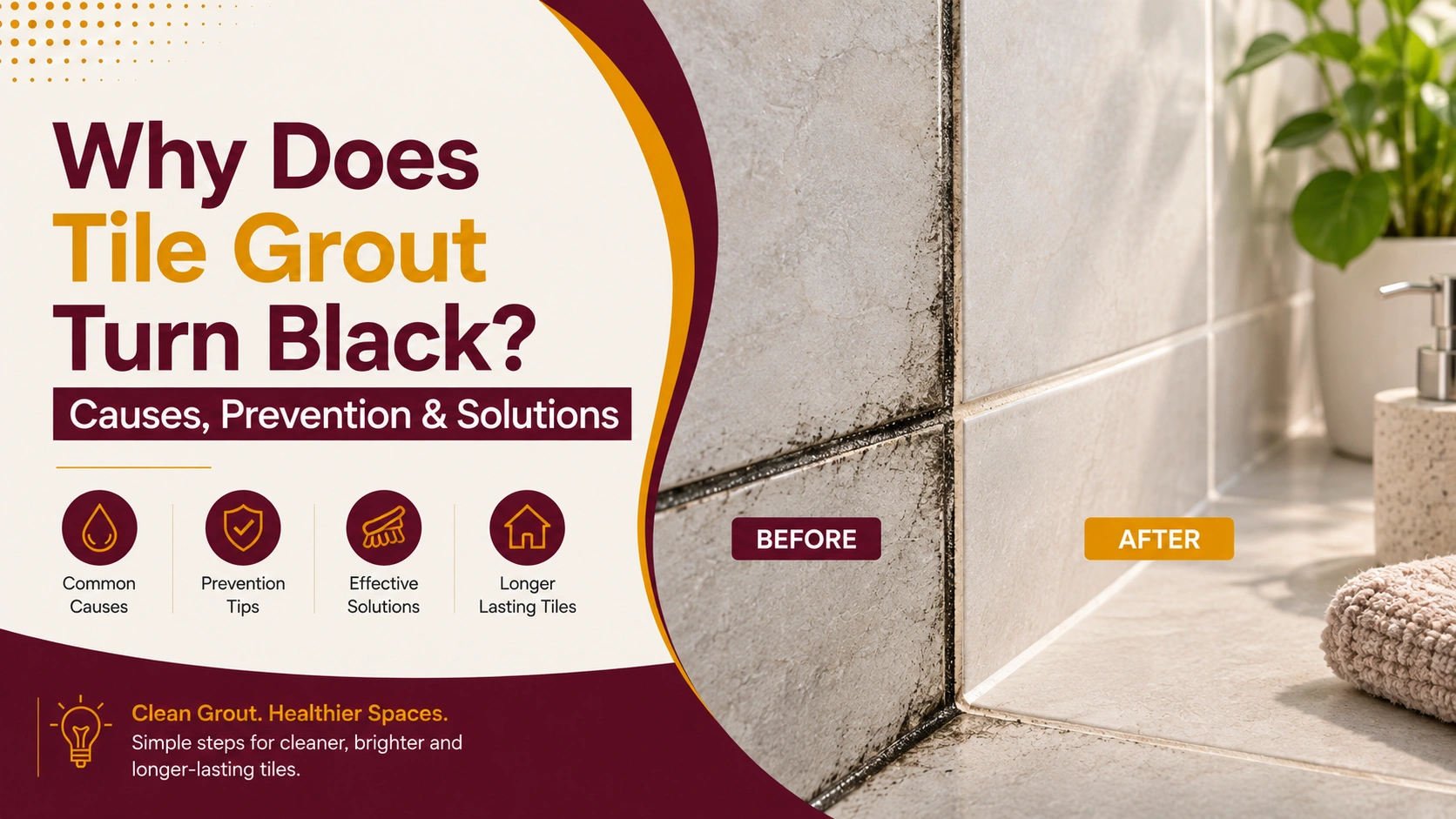
Black tile grout is commonly caused by moisture, mould, mildew, dirt, soap residue, poor ventilation or deteriorating joints. Bathrooms and other damp areas are particularly vulnerable. Cleaning can remove surface contamination, but recurring blackening may indicate an underlying moisture or grout problem that needs investigation. Identifying the cause early helps protect the joints and maintain the appearance of the tiled surface.
What Is Black Tile Grout?
Black tile grout refers to grout joints that develop dark or black discolouration after installation.
The discolouration does not necessarily mean that the grout itself has chemically changed. In many cases, the dark appearance comes from contamination, moisture-related growth or accumulated residue.
Common causes include:
- Mould
- Mildew
- Dirt
- Soap residue
- Grease
- Moisture
- Water seepage
- Grout deterioration
Identifying the actual cause is important because cleaning alone may not solve recurring discolouration.
Why Does Tile Grout Turn Black?
1. Excess Moisture
Moisture is one of the most common contributors to blackened grout.
Bathrooms, showers, kitchens, balconies and other wet areas can remain damp for extended periods. Persistent moisture creates favourable conditions for mould, mildew and other contaminants.
2. Poor Ventilation
Poor airflow slows down surface drying.
When moisture remains trapped around tile joints, mould and mildew can become more likely. This is especially common in enclosed bathrooms and poorly ventilated wet areas.
3. Mould and Mildew
Dark spots concentrated along damp grout joints may indicate mould or mildew.
If black patches continue returning after cleaning, the source of moisture should be investigated rather than repeatedly treating only the visible stain.
4. Dirt Accumulation
Grout is generally more textured than the surrounding tile surface.
As a result, dust, dirt and other contaminants can collect along the joints. High-traffic floors are particularly susceptible to this type of discolouration.
5. Soap Residue
Bathrooms can develop deposits from soaps, shampoos and other personal-care products.
Over time, these residues can combine with moisture and dirt, making grout appear darker.
6. Water Seepage
Persistent water seepage around tiled areas can cause recurring moisture problems.
If grout becomes black again shortly after cleaning, check for plumbing leaks, drainage issues or moisture entering from behind the tiled surface.
7. Deteriorating Grout
Cracked, loose or eroded grout can become more vulnerable to staining and contamination.
Damaged joints should be inspected and repaired rather than relying solely on surface cleaning.
Is Black Grout Always Mould?
No. Black grout is not always mould.
Dark discolouration can also result from:
- Dirt
- Grease
- Hard-water deposits
- Soap residue
- Cleaning-product residue
- Grout deterioration
A simple inspection can help determine whether the issue is surface contamination or a deeper installation problem.
If discolouration returns quickly after cleaning, investigate moisture and grout condition instead of simply using increasingly aggressive chemicals.
Why Is Preventing Black Grout Important?
Proper grout maintenance can:
- Improve the appearance of tiled surfaces
- Reduce staining
- Limit contamination
- Protect tile joints
- Make routine cleaning easier
- Help identify moisture problems early
- Extend the useful life of grout
For commercial properties, clean grout can also contribute to a more professional appearance during inspections, maintenance visits and project handovers.
How to Prevent Black Grout
Improve Ventilation
Use appropriate ventilation in bathrooms and enclosed wet areas.
Exhaust fans, windows and adequate airflow can help reduce persistent humidity.
Remove Standing Water
Do not allow water to remain around tile joints for extended periods.
Proper drainage and regular drying can reduce moisture exposure.
Clean Regularly
Routine cleaning prevents dirt, soap residue and other contaminants from accumulating.
Use a suitable tile cleaner according to the manufacturer’s instructions and the type of tile and grout installed.
Repair Damaged Joints
Cracked, missing or severely deteriorated grout should be repaired promptly.
Delaying repairs can allow moisture and contaminants to enter vulnerable areas.
Choose Suitable Grout
For demanding environments, selecting the best tile grout depends on tile type, joint width, moisture exposure, chemical exposure and maintenance requirements.
A suitable high-performance grout may provide better resistance to staining and moisture than a conventional option in specific applications.
How to Clean Blackened Grout
A practical cleaning process includes the following steps:
Step 1: Remove Loose Dirt
Sweep or vacuum the tiled surface before applying any cleaning product.
Step 2: Identify the Grout Type
Determine whether the joint contains cement-based grout or epoxy grout.
This is important because different grout systems can have different cleaning requirements.
Step 3: Identify the Contamination
Determine whether the dark appearance is caused by:
- Dirt
- Mould
- Grease
- Soap residue
- Hard-water deposits
- Construction residue
Step 4: Select a Compatible Cleaner
Choose a cleaning product suitable for the tile and grout.
Step 5: Follow Dilution Instructions
Do not assume that a higher concentration will produce better results.
Always follow the manufacturer’s recommended dilution and application procedure.
Step 6: Apply and Agitate
Use a suitable brush or cleaning tool to work the cleaner into the affected joints.
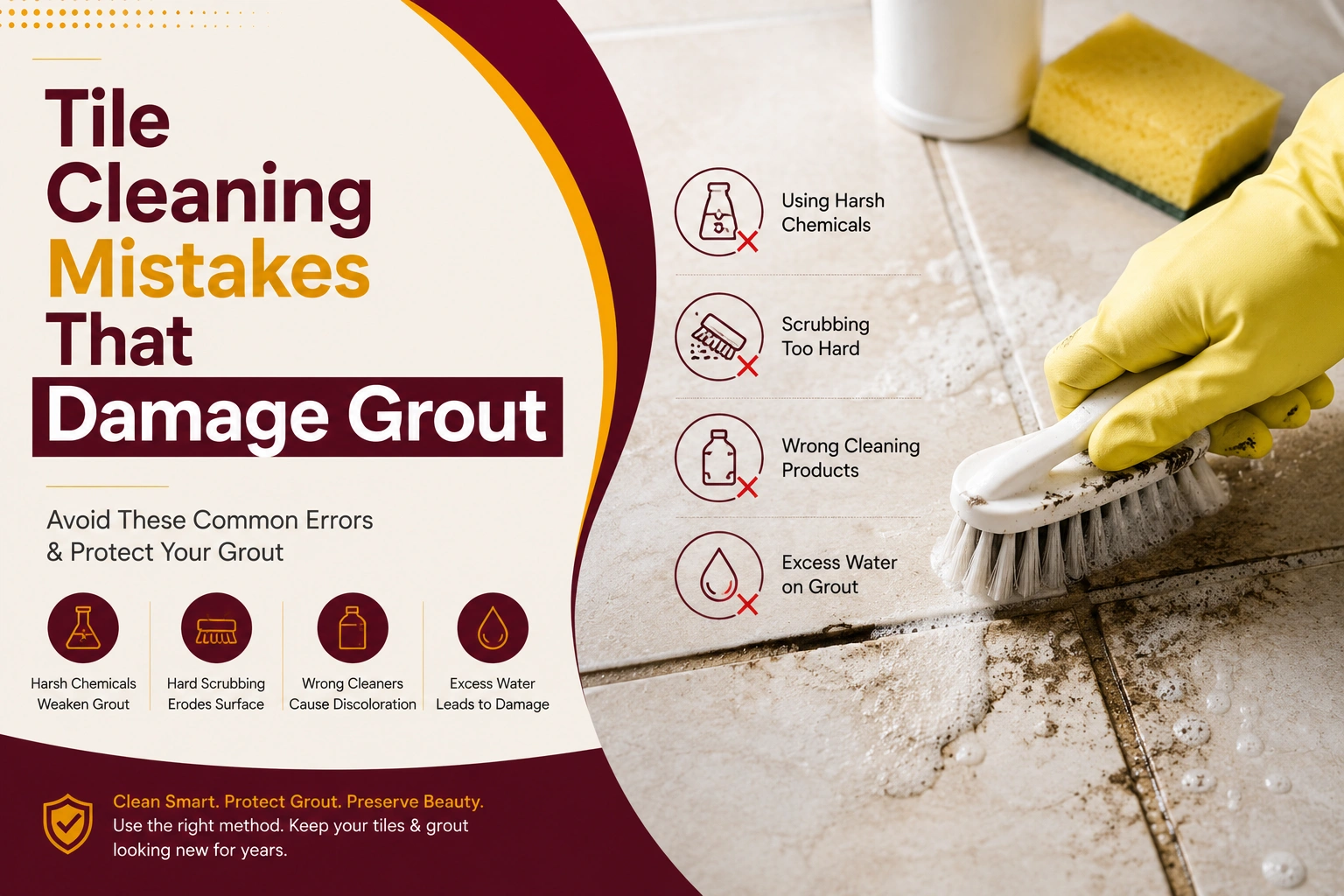
Avoid excessive mechanical force that could damage weak or deteriorated grout.
Step 7: Rinse and Dry
Follow the product instructions regarding rinsing and allow the surface to dry properly.
Also Read: How Long Does Tile Grout Last?
Cement Grout vs Epoxy Grout
| Feature | Cement-Based Grout | Epoxy Grout |
|---|---|---|
| Porosity | Generally higher | Generally low |
| Stain resistance | Product dependent | Generally high |
| Moisture resistance | Product dependent | Generally high |
| Cleaning | Requires routine care | Generally easier |
| Chemical resistance | Varies by product | Generally high |
| Maintenance | Regular maintenance required | Generally lower maintenance |
Epoxy grout is often considered for areas where low porosity, stain resistance and chemical resistance are important.
However, product selection should always be based on the manufacturer’s technical specifications and project conditions.
Can Epoxy Grout Prevent Blackening?
A suitable epoxy grout can help reduce some common staining and moisture-related maintenance concerns because epoxy formulations are generally dense and low in porosity.
For example, grout for tiles can be considered in suitable residential, commercial and demanding floor applications where resistance to staining and moisture is important.
However, epoxy grout cannot correct poor ventilation, water leakage, incorrect drainage or structural moisture problems.
The installation environment still needs to be addressed.
When Should Black Grout Be Replaced?
Cleaning may not be sufficient when grout has:
- Deep cracks
- Missing sections
- Severe erosion
- Persistent moisture damage
- Loose material
- Repeated contamination
- Significant colour deterioration
Replacement should be considered after identifying the underlying cause.
If moisture is responsible, repair the moisture source before installing new grout.
Otherwise, the same problem may return.
Complete Tile Installation Matters
Grout should be considered as part of the complete tile installation system.
A suitable tile adhesive creates the bond between the substrate and tile. Proper substrate preparation, correct adhesive application and appropriate tile placement are equally important.
After installation, grout fills the joints and cleaning maintains the finished surface.
The overall system can therefore be viewed as:
Substrate → Tile Adhesive → Tile → Grout → Cleaning → Maintenance
Selecting compatible materials helps create a more reliable installation.
Other Construction Chemical Requirements
Large construction projects may involve several different chemical products.
For example, an admixture may be used for specific concrete or cementitious applications according to its technical requirements.
Similarly, customers searching for white cement online should compare product specifications, intended applications, packaging and manufacturer recommendations before making a purchase.
These products have different purposes and should not be treated as interchangeable with tile grout or tile adhesive.
Mozaic Chemical Grout Solutions
Mozaic Chemical offers tile grouts and epoxy grout solutions for residential and commercial applications.
Its product portfolio includes grout, epoxy grout, tile adhesive and tile-cleaning solutions, allowing contractors to evaluate different stages of tile installation and maintenance through a broader construction chemical portfolio.
For professional projects, product selection should be based on:
- Tile type
- Joint width
- Moisture exposure
- Traffic
- Chemical exposure
- Cleaning requirements
- Expected service conditions
Mozaic Chemical’s Indian Presence
Mozaic Chemical operates as an Indian manufacturer and supplier of tile adhesives, grouts and construction chemical solutions.
Its portfolio covers multiple categories used across tile installation, finishing and construction applications.
For builders, architects, contractors and project managers, selecting products based on technical requirements rather than price alone can help achieve more consistent project outcomes.
Expert Recommendation
If grout repeatedly turns black, do not immediately assume that the solution is simply stronger cleaning.
Follow this approach:
- Check the moisture level.
- Inspect ventilation.
- Look for water seepage.
- Identify the type of grout.
- Identify the source of discolouration.
- Clean with a compatible product.
- Inspect the grout after cleaning.
- Repair damaged joints.
- Address underlying moisture problems.
- Maintain the installation regularly.
This approach helps distinguish a cleaning issue from a genuine grout or moisture problem.
Key Takeaways
Black grout can result from moisture, mould, mildew, dirt, soap residue, poor ventilation or deteriorating joints.
Cleaning can address surface contamination, but recurring blackening requires further investigation.
For long-term performance:
- Control moisture.
- Maintain ventilation.
- Clean regularly.
- Repair damaged grout.
- Select grout according to the application.
- Use compatible cleaning products.
- Investigate recurring discolouration.
A properly maintained tile installation can remain cleaner, more hygienic-looking and visually consistent for longer.
Frequently Asked Questions
Why does bathroom grout turn black?
Moisture, mould, mildew, soap residue, poor ventilation and accumulated dirt are common causes of black grout in bathrooms.
Is black grout always mould?
No. Black discolouration can also be caused by dirt, grease, hard-water deposits, cleaning residue or deteriorating grout.
How do I clean black tile grout?
First identify the grout type and source of contamination. Then use a compatible cleaner according to the manufacturer’s dilution and application instructions.
Can black grout be prevented?
Yes. Good ventilation, moisture control, regular cleaning, proper drainage and timely grout repairs can help reduce recurring blackening.
Should black grout be replaced?
Replacement may be necessary when grout is deeply cracked, missing, severely eroded, loose or repeatedly affected by moisture.
Is epoxy grout suitable for bathrooms?
A suitable epoxy grout can be advantageous in wet areas because of its generally low porosity and resistance to staining and moisture. The specific product should be checked for the intended application.
Can epoxy grout stop water leakage?
No. Epoxy grout is a joint-filling material and should not be treated as a substitute for a complete waterproofing system or plumbing repair.
Why does grout turn black again after cleaning?
Recurring blackening can indicate persistent moisture, poor ventilation, water seepage, mould growth or deteriorated grout. The underlying cause should be investigated rather than repeatedly applying stronger cleaners.