What Is the Best Epoxy Grout for Different Tile Applications?

How to Choose the Best Epoxy Grout for Different Tile Applications

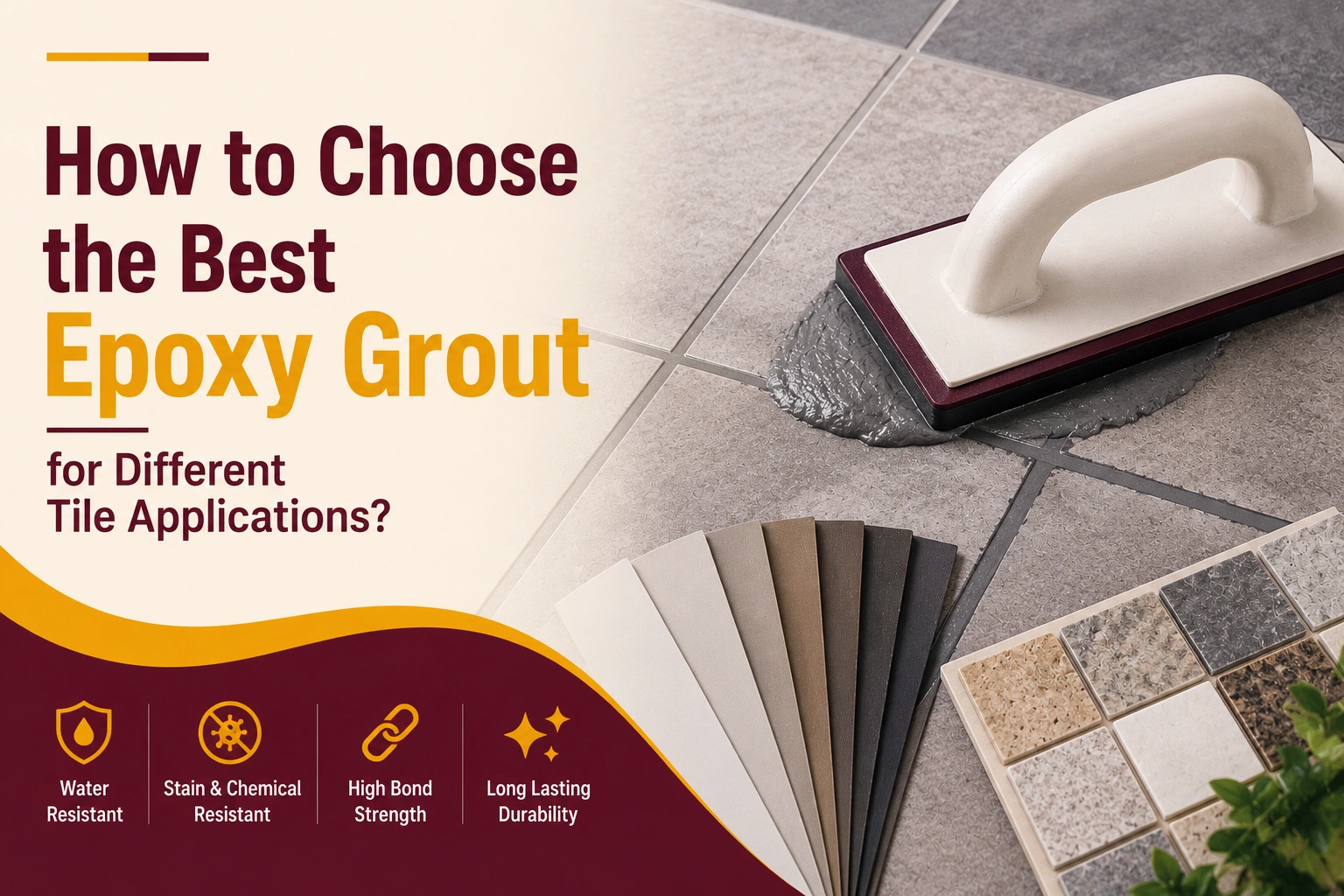
The best epoxy grout depends on the tile type, joint width, moisture exposure, chemical exposure, traffic, and cleaning requirements. A bathroom, swimming pool, commercial kitchen, and industrial floor do not necessarily need the same grout specification.

Choosing grout by colour or price alone can lead to maintenance problems. The joint is part of thefinished tile system, so its service environment should guide product selection.

What Factors Should You Consider When Choosing Epoxy Grout?

The right epoxy grout should match the conditions the tile joints will face during service. Start with the application, then check the product’s technical specifications for joint width, chemical resistance, water absorption, curing, and temperature limitations.

1. Tile Type

Porcelain, vitrified, ceramic, glass, and natural stone tiles have different surface characteristics.

Porcelain and vitrified tiles have low water absorption. Their joints can be filled with epoxy grout when the grout is compatible with the tile and installation conditions.

Natural stone needs additional care. Highly porous or textured surfaces can retain epoxy residue. A small test area is useful before starting a large installation.

2. Joint Width

Epoxy grout products have specified joint-width ranges. The grout should not be selected without checking this requirement.

For example, a product intended for narrow joints should not automatically be used for a wide-joint installation. Follow the manufacturer’s technical data sheet for the permitted range.

3. Moisture Exposure

Bathrooms, shower areas, kitchens, and pools experience repeated water exposure. Epoxy grout is often considered for these locations because cured epoxy grout has low water absorption.

A waterproof epoxy grout can be useful where moisture resistance is a key requirement, but grout alone does not make an entire tiled assembly waterproof. Waterproofing membranes, substrate preparation, movement joints, and drainage still matter.

4. Chemical Exposure

Commercial kitchens, laboratories, hospitals, food-processing areas, and industrial facilities may encounter cleaning chemicals or other substances.

For these projects, check the manufacturer’s chemical-resistance data against the actual chemicals and concentrations expected on site. Do not assume that every epoxy grout has identical chemical resistance.

5. Traffic and Mechanical Stress

Floor joints in airports, malls, hotels, restaurants, and industrial facilities can experience significantly more traffic than residential floors.

In such areas, consider mechanical performance, cleaning frequency, joint dimensions, and the expected service conditions before selecting the grout.

Which Epoxy Grout Is Best for Bathrooms?

For bathrooms and shower areas, choose an epoxy grout designed for wet environments with low water absorption and suitable stain resistance. The grout should also be compatible with the tile and specified joint width.

Bathrooms frequently experience soap, shampoo, water, and household cleaning products. A dense epoxy joint can make routine cleaning easier than a more porous grout.

For shower floors, grout selection should be considered alongside the waterproofing system and drainage design. Epoxy grout cannot compensate for a failed waterproofing layer underneath the tiles.

Which Epoxy Grout Is Best for Kitchens?

Kitchen applications require grout that can handle food spills, grease, frequent cleaning, and moisture. Epoxy grout is often suitable because its cured surface resists many common stains and is easier to maintain.

Commercial kitchens have more demanding conditions than domestic kitchens. Frequent washing and exposure to cleaning chemicals make chemical-resistance data particularly relevant.

For a restaurant floor, for example, product selection should account for both foot traffic and cleaning chemicals rather than simply choosing a grout based on colour.

Which Epoxy Grout Is Best for Swimming Pools?

Swimming pools require a grout system suitable for continuous or repeated water exposure. Select a product whose technical documentation specifically supports the intended pool application.

Pool projects also require attention to water chemistry, movement, substrate preparation, tile type, and joint design. Chlorinated water and cleaning chemicals can create different exposure conditions from those found in a residential bathroom.

The grout should therefore be selected as part of the complete pool tile installation system.

Also Read: Epoxy Grout for Tiles: Complete Guide to Uses, Benefits and Application

Which Epoxy Grout Is Best for Porcelain and Vitrified Tiles?

Epoxy grout can be suitable for porcelain and vitrified tiles because both tile types generally have low water absorption. However, the tile surface must be considered during application because textured or uneven finishes can make epoxy residue harder to remove.

For large-format porcelain tiles, joint preparation is particularly important. Tile adhesive should not remain excessively deep inside the joint because it reduces the available space for grout.

A useful site practice is to inspect several joints before starting full-scale grouting. This confirms the joint depth, grout consistency, application technique, and cleaning process.

Which Epoxy Grout Is Best for Commercial and Industrial Areas?

Commercial and industrial applications require grout selection based on actual exposure conditions. High foot traffic, frequent cleaning, moisture, food products, oils, or chemicals can all influence the specification.

Hospitals may prioritise hygiene and cleaning performance. Commercial kitchens may need resistance to frequent washing and food-related stains. Industrial facilities may require specific chemical resistance.

There is no single epoxy grout that is automatically the right choice for every commercial project. The specification should come from the environment and the manufacturer’s tested performance.

Best Epoxy Grout Selection Guide

ApplicationKey RequirementSelection Consideration
BathroomMoisture resistanceLow water absorption
ShowerContinuous moistureWater exposure + joint compatibility
KitchenStain and cleaning resistanceHousehold or commercial cleaning
Swimming poolWater and chemical exposurePool suitability + chemical resistance
Porcelain tilesLow-absorption tile compatibilityTile surface + joint width
Vitrified tilesDense tile surfaceCompatible epoxy formulation
HospitalHygiene and cleaningChemical and maintenance requirements
Commercial kitchenFrequent cleaningChemical and stain resistance
Industrial floorHeavy service conditionsMechanical + chemical exposure

How Should Epoxy Grout Be Applied?

Correct product selection is only half the job. Epoxy grout must be mixed, applied, and cleaned according to the manufacturer’s instructions.

  1. Check the tile joints. Remove loose adhesive and debris.
  2. Confirm the joint depth and width. Make sure they fall within the product specification.
  3. Mix the complete components. Maintain the manufacturer’s component ratio.
  4. Apply the grout firmly. Fill the entire joint without leaving voids.
  5. Remove excess promptly. Do not allow residue to cure on the tile surface.
  6. Clean the tiles correctly. Use the manufacturer’s recommended cleaning method.
  7. Protect the installation. Avoid premature traffic or water exposure during curing.

This process is especially important for textured porcelain and stone surfaces. Once epoxy residue cures, removing it can become considerably more difficult.

What Makes an Epoxy Grout a Good Choice?

A good epoxy grout is one whose tested characteristics match the project’s actual requirements. Look at water absorption, chemical resistance, joint-width range, working time, curing requirements, mechanical performance, colour stability, and cleaning instructions.

The best epoxy grout for a residential bathroom may not be the right specification for an industrial floor. Product selection should always be application-led.

For project teams, working with a tile adhesive manufacturer that provides technical documentation can also help ensure that the adhesive and grout are selected as compatible components of the overall tile installation.

Practical Installation Insight

One of the most useful quality checks during epoxy grouting is a small trial section. Instead of beginning with an entire room, grout a limited area and observe how the material behaves on the actual tile surface.

Check three things: joint filling, tile-surface cleaning, and final appearance.

This is particularly useful with textured tiles. A grout that looks easy to clean on a smooth glazed tile can behave differently on a textured porcelain surface. Testing the actual tile before full application can prevent large-area cleaning problems and unnecessary rework.

Frequently Asked Questions

What is the best epoxy grout for bathrooms?

The best epoxy grout for a bathroom should have low water absorption and be suitable for repeated moisture exposure. Check compatibility with the tile type, joint width, and cleaning products used in the bathroom.

Is epoxy grout suitable for kitchens?

Yes. Epoxy grout is suitable for many kitchen applications because it can provide stain resistance and easier cleaning. Commercial kitchens require additional consideration of chemical exposure, cleaning frequency, and traffic.

Can epoxy grout be used with porcelain tiles?

Yes. Epoxy grout can be used with porcelain tiles when the product is compatible with the tile and specified joint width. Textured porcelain surfaces should be tested first to confirm that grout residue can be removed effectively.

Is epoxy grout suitable for swimming pools?

Yes, products specifically intended for pool applications can be suitable for swimming pools. Selection should consider water exposure, pool chemicals, tile type, joint design, and the manufacturer’s technical specifications.

Is epoxy grout better than cement grout?

Epoxy grout generally provides lower water absorption and greater resistance to many stains and chemicals. Cement grout can still be appropriate for standard applications where these performance characteristics aren’t required.

How do you choose the right epoxy grout?

Choose epoxy grout according to tile type, joint width, moisture exposure, chemical exposure, traffic, cleaning requirements, and application conditions. Always compare these requirements with the manufacturer’s technical data.

Does epoxy grout make tiles waterproof?

No. Epoxy grout has low water absorption, but grout alone does not waterproof a tiled assembly. Proper substrate preparation, waterproofing membranes where required, drainage, and movement-joint design are also necessary.

Product Details
GENERAL ENQUIRY
contact us form
Social Links

What Is the Best Epoxy Grout for Different Tile Applications?

Table of Contents

The best epoxy grout depends on the tile type, joint width, moisture exposure, chemical exposure, traffic, and cleaning requirements. A bathroom, swimming pool, commercial kitchen, and industrial floor do not necessarily need the same grout specification.

Choosing grout by colour or price alone can lead to maintenance problems. The joint is part of thefinished tile system, so its service environment should guide product selection.

What Factors Should You Consider When Choosing Epoxy Grout?

The right epoxy grout should match the conditions the tile joints will face during service. Start with the application, then check the product’s technical specifications for joint width, chemical resistance, water absorption, curing, and temperature limitations.

1. Tile Type

Porcelain, vitrified, ceramic, glass, and natural stone tiles have different surface characteristics.

Porcelain and vitrified tiles have low water absorption. Their joints can be filled with epoxy grout when the grout is compatible with the tile and installation conditions.

Natural stone needs additional care. Highly porous or textured surfaces can retain epoxy residue. A small test area is useful before starting a large installation.

2. Joint Width

Epoxy grout products have specified joint-width ranges. The grout should not be selected without checking this requirement.

For example, a product intended for narrow joints should not automatically be used for a wide-joint installation. Follow the manufacturer’s technical data sheet for the permitted range.

3. Moisture Exposure

Bathrooms, shower areas, kitchens, and pools experience repeated water exposure. Epoxy grout is often considered for these locations because cured epoxy grout has low water absorption.

A waterproof epoxy grout can be useful where moisture resistance is a key requirement, but grout alone does not make an entire tiled assembly waterproof. Waterproofing membranes, substrate preparation, movement joints, and drainage still matter.

4. Chemical Exposure

Commercial kitchens, laboratories, hospitals, food-processing areas, and industrial facilities may encounter cleaning chemicals or other substances.

For these projects, check the manufacturer’s chemical-resistance data against the actual chemicals and concentrations expected on site. Do not assume that every epoxy grout has identical chemical resistance.

5. Traffic and Mechanical Stress

Floor joints in airports, malls, hotels, restaurants, and industrial facilities can experience significantly more traffic than residential floors.

In such areas, consider mechanical performance, cleaning frequency, joint dimensions, and the expected service conditions before selecting the grout.

Which Epoxy Grout Is Best for Bathrooms?

For bathrooms and shower areas, choose an epoxy grout designed for wet environments with low water absorption and suitable stain resistance. The grout should also be compatible with the tile and specified joint width.

Bathrooms frequently experience soap, shampoo, water, and household cleaning products. A dense epoxy joint can make routine cleaning easier than a more porous grout.

For shower floors, grout selection should be considered alongside the waterproofing system and drainage design. Epoxy grout cannot compensate for a failed waterproofing layer underneath the tiles.

Which Epoxy Grout Is Best for Kitchens?

Kitchen applications require grout that can handle food spills, grease, frequent cleaning, and moisture. Epoxy grout is often suitable because its cured surface resists many common stains and is easier to maintain.

Commercial kitchens have more demanding conditions than domestic kitchens. Frequent washing and exposure to cleaning chemicals make chemical-resistance data particularly relevant.

For a restaurant floor, for example, product selection should account for both foot traffic and cleaning chemicals rather than simply choosing a grout based on colour.

Which Epoxy Grout Is Best for Swimming Pools?

Swimming pools require a grout system suitable for continuous or repeated water exposure. Select a product whose technical documentation specifically supports the intended pool application.

Pool projects also require attention to water chemistry, movement, substrate preparation, tile type, and joint design. Chlorinated water and cleaning chemicals can create different exposure conditions from those found in a residential bathroom.

The grout should therefore be selected as part of the complete pool tile installation system.

Also Read: Epoxy Grout for Tiles: Complete Guide to Uses, Benefits and Application

Which Epoxy Grout Is Best for Porcelain and Vitrified Tiles?

Epoxy grout can be suitable for porcelain and vitrified tiles because both tile types generally have low water absorption. However, the tile surface must be considered during application because textured or uneven finishes can make epoxy residue harder to remove.

For large-format porcelain tiles, joint preparation is particularly important. Tile adhesive should not remain excessively deep inside the joint because it reduces the available space for grout.

A useful site practice is to inspect several joints before starting full-scale grouting. This confirms the joint depth, grout consistency, application technique, and cleaning process.

Which Epoxy Grout Is Best for Commercial and Industrial Areas?

Commercial and industrial applications require grout selection based on actual exposure conditions. High foot traffic, frequent cleaning, moisture, food products, oils, or chemicals can all influence the specification.

Hospitals may prioritise hygiene and cleaning performance. Commercial kitchens may need resistance to frequent washing and food-related stains. Industrial facilities may require specific chemical resistance.

There is no single epoxy grout that is automatically the right choice for every commercial project. The specification should come from the environment and the manufacturer’s tested performance.

Best Epoxy Grout Selection Guide

ApplicationKey RequirementSelection Consideration
BathroomMoisture resistanceLow water absorption
ShowerContinuous moistureWater exposure + joint compatibility
KitchenStain and cleaning resistanceHousehold or commercial cleaning
Swimming poolWater and chemical exposurePool suitability + chemical resistance
Porcelain tilesLow-absorption tile compatibilityTile surface + joint width
Vitrified tilesDense tile surfaceCompatible epoxy formulation
HospitalHygiene and cleaningChemical and maintenance requirements
Commercial kitchenFrequent cleaningChemical and stain resistance
Industrial floorHeavy service conditionsMechanical + chemical exposure

How Should Epoxy Grout Be Applied?

Correct product selection is only half the job. Epoxy grout must be mixed, applied, and cleaned according to the manufacturer’s instructions.

  1. Check the tile joints. Remove loose adhesive and debris.
  2. Confirm the joint depth and width. Make sure they fall within the product specification.
  3. Mix the complete components. Maintain the manufacturer’s component ratio.
  4. Apply the grout firmly. Fill the entire joint without leaving voids.
  5. Remove excess promptly. Do not allow residue to cure on the tile surface.
  6. Clean the tiles correctly. Use the manufacturer’s recommended cleaning method.
  7. Protect the installation. Avoid premature traffic or water exposure during curing.

This process is especially important for textured porcelain and stone surfaces. Once epoxy residue cures, removing it can become considerably more difficult.

What Makes an Epoxy Grout a Good Choice?

A good epoxy grout is one whose tested characteristics match the project’s actual requirements. Look at water absorption, chemical resistance, joint-width range, working time, curing requirements, mechanical performance, colour stability, and cleaning instructions.

The best epoxy grout for a residential bathroom may not be the right specification for an industrial floor. Product selection should always be application-led.

For project teams, working with a tile adhesive manufacturer that provides technical documentation can also help ensure that the adhesive and grout are selected as compatible components of the overall tile installation.

Practical Installation Insight

One of the most useful quality checks during epoxy grouting is a small trial section. Instead of beginning with an entire room, grout a limited area and observe how the material behaves on the actual tile surface.

Check three things: joint filling, tile-surface cleaning, and final appearance.

This is particularly useful with textured tiles. A grout that looks easy to clean on a smooth glazed tile can behave differently on a textured porcelain surface. Testing the actual tile before full application can prevent large-area cleaning problems and unnecessary rework.

Frequently Asked Questions

What is the best epoxy grout for bathrooms?

The best epoxy grout for a bathroom should have low water absorption and be suitable for repeated moisture exposure. Check compatibility with the tile type, joint width, and cleaning products used in the bathroom.

Is epoxy grout suitable for kitchens?

Yes. Epoxy grout is suitable for many kitchen applications because it can provide stain resistance and easier cleaning. Commercial kitchens require additional consideration of chemical exposure, cleaning frequency, and traffic.

Can epoxy grout be used with porcelain tiles?

Yes. Epoxy grout can be used with porcelain tiles when the product is compatible with the tile and specified joint width. Textured porcelain surfaces should be tested first to confirm that grout residue can be removed effectively.

Is epoxy grout suitable for swimming pools?

Yes, products specifically intended for pool applications can be suitable for swimming pools. Selection should consider water exposure, pool chemicals, tile type, joint design, and the manufacturer’s technical specifications.

Is epoxy grout better than cement grout?

Epoxy grout generally provides lower water absorption and greater resistance to many stains and chemicals. Cement grout can still be appropriate for standard applications where these performance characteristics aren’t required.

How do you choose the right epoxy grout?

Choose epoxy grout according to tile type, joint width, moisture exposure, chemical exposure, traffic, cleaning requirements, and application conditions. Always compare these requirements with the manufacturer’s technical data.

Does epoxy grout make tiles waterproof?

No. Epoxy grout has low water absorption, but grout alone does not waterproof a tiled assembly. Proper substrate preparation, waterproofing membranes where required, drainage, and movement-joint design are also necessary.
Blogs